Independent app review · Evidence checked August 31, 2026
Due review 2026: the reminder app that refuses to be ignored
Due is not trying to manage every project in your life. It wants to make one important promise harder to forget by repeating the notification until you act. That narrowness is either irritating or exactly why the app works.
 Due
DueOur take
Is it worth using?
Due is the best specialist here for reminders that genuinely must keep returning. It is quick to set, quick to postpone and costs $7.99 on the current US App Store listing. Use it beside another task manager for medication, bills, departures and time-sensitive chores. Do not expect projects, collaboration or a complete planning system.
Inside the apps
What they actually look like
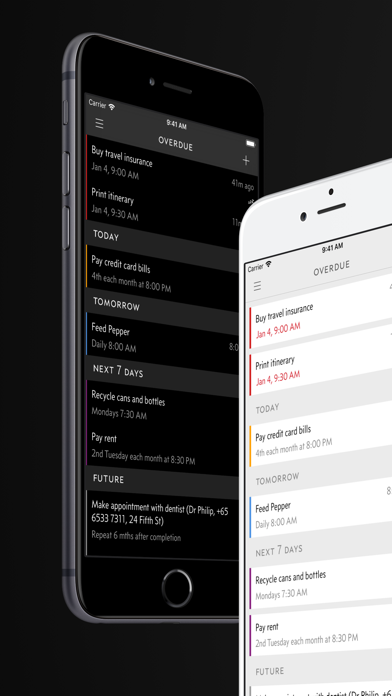
These screenshots come from the apps' current App Store listings. They are not mockups we made for the article.
What users report
What starts to matter after a week
We read recent reviews for Due to look for praise and friction that product pages leave out. They are anecdotes, not a vote, so they challenge our testing rather than decide the verdict.
One reviewer has used Due for a decade and now values the old reminder log as a record of daily life. Others praise its natural-language entry and persistent alerts, while asking for more dependable device syncing.
The quick version
The differences that matter
- Best for
- Persistent reminders and reusable timers
- Entry price
- $7.99 on the US App Store
- Main strength
- Auto-snooze keeps alerting until you respond
- Main weakness
- Not a project or collaboration system
- Capture
- Fast time picker and natural date parsing
- Best alternative
- Apple Reminders for breadth; TickTick for tasks plus alerts
Persistent notifications are the product, not a setting
Most task apps send one alert and trust you to notice it. Due can repeat at a chosen interval until the reminder is completed or moved. For a passport renewal or medication, that insistence can be more useful than an elegant project hierarchy.
Do not use the same behavior for everything. If every minor chore nags, the alerts become background noise and the important promise loses its advantage.
Setting and postponing a time is unusually quick
Preset buttons and natural date parsing reduce the taps needed to choose a time. Postponing is equally direct, which matters because a reminder often arrives when acting immediately is impossible.
One long-term reviewer praises the natural-language entry and delay options after years of using calendar events as a makeshift task list. Due is built around precisely that moment of rescheduling.
Timers make the narrow app more useful
Reusable countdown timers suit cooking, laundry, medication gaps and other durations that recur without belonging to a project. They sit naturally beside reminders because both jobs are about bringing time back to your attention.
That does not turn Due into an all-in-one organizer. There is no reason to move a project plan into it simply because several project steps need alerts.
A decade of reminders becomes an unexpected record
One reviewer who has used Due for ten years says the old reminder log now helps reconstruct what happened on ordinary days. That was probably not the reason they installed the app, but it shows the value of dependable history.
Another reviewer asks for better syncing between mobile and Mac. A specialist reminder app must be especially clear about which device will alert and whether a change has traveled.
Flaws, but not dealbreakers
Due costs money before you know whether persistent alerts suit you, and it lacks the projects, notes and shared lists of broader competitors. Cross-device expectations also need careful testing.
The narrow job is a strength. People who repeatedly miss one-off notifications may get more practical value from Due than from a much larger productivity suite.
Good to know
A few common questions
Why use Due instead of Apple Reminders?
Due specializes in persistent auto-snooze and very fast postponing. Reminders is broader, free and better integrated with shared Apple lists.
How much does Due cost?
The US App Store listed Due at $7.99 when checked on August 31, 2026.
Can Due manage projects?
Not well. It is a reminder and timer specialist rather than a complete project task manager.
Sources
Where we checked the facts
We use the app maker's own pages for prices and features. Reviews and community posts are useful for spotting problems, but one person's experience is still one person's experience.
- 01OfficialDue product and feature pageView source
- 02App StoreDue US App Store listingView source
- 03App StoreRecent Due US App Store reviewsView source